
Unlocking Hidden Value: What to Do with Your Sterling Silver Flatware and Jewelry
Unlocking Hidden Value: What to Do with Your Sterling Silver Flatware and Jewelry
Tucked away in the back of dining room hutches, closets, or attic boxes across the country sit millions of ounces of physical wealth that families completely overlook. It usually takes the form of an inherited family silverware set or a box of old, tangled jewelry passed down through generations. Because these items look like everyday household utensils or outdated fashion accessories, many people have no idea that sterling silver holds an incredible amount of value—and its physical weight adds up faster than almost any other household item.
If you have come into possession of an old collection of flatware or jewelry, understanding how to identify true sterling and knowing the reality of how the precious metals market evaluates this material can turn an unused heirloom into clean, straightforward value.
The Sterling Standard: 92.5% Pure Value
The first and most critical step in evaluating your silver is distinguishing between sterling silver and silver plate. Silver plate consists of a base metal (like copper or brass) covered in a micro-thin layer of silver. While silver-plated flatware sets can look beautiful, they contain virtually no reclaimable precious metal and carry no secondary raw metal value.
True sterling silver, however, is a highly regulated precious metal alloy consisting of exactly 92.5% pure silver and 7.5% copper (added for structural strength). Because it is nearly pure precious metal, every single fork, spoon, knife handle, and necklace carries an intrinsic value tied directly to the global spot price of silver.
How to Identify True Sterling Silver in Your Home
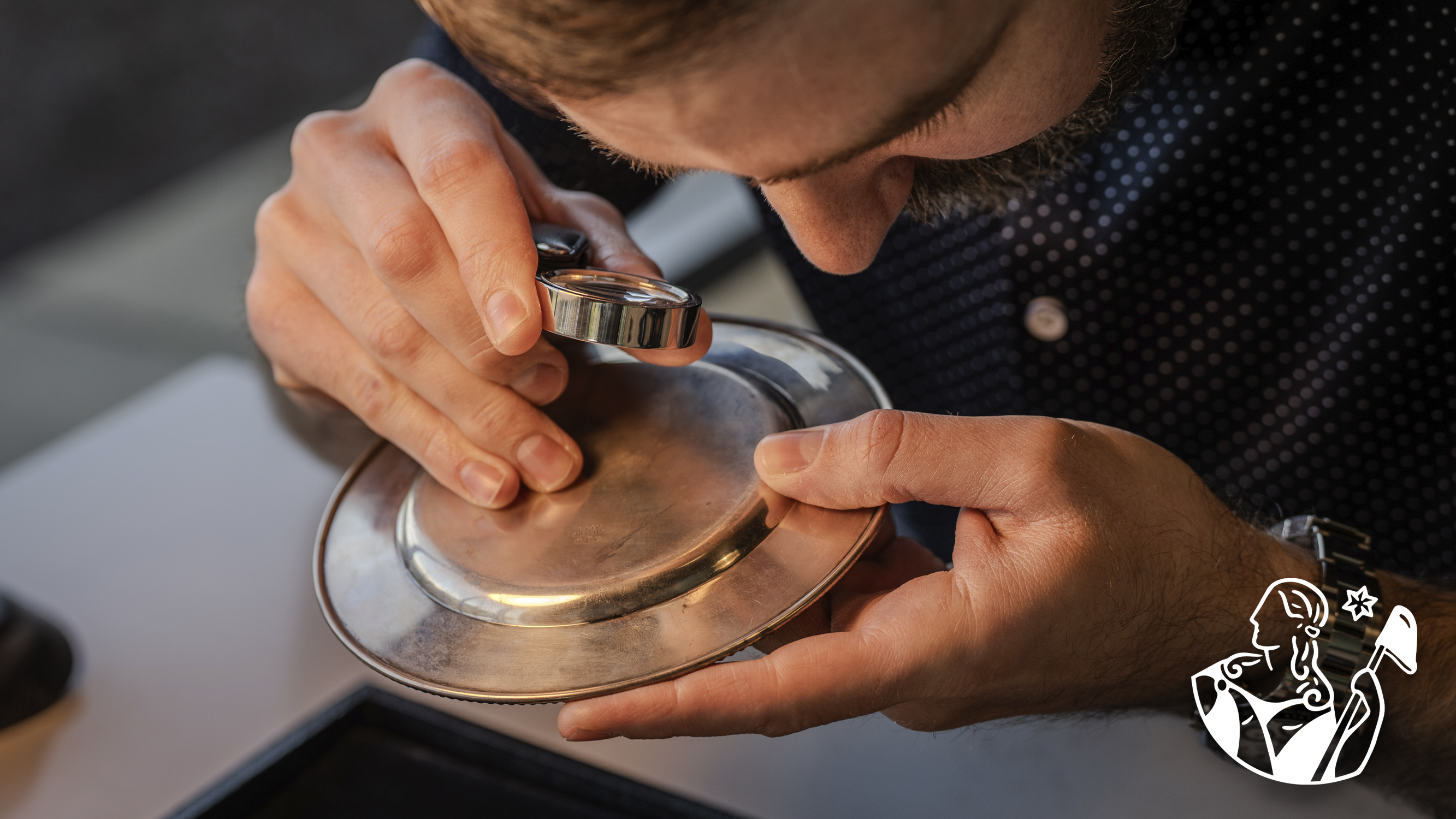
You do not need specialized chemical tests to separate the treasures from the plating. Hardware manufacturers and jewelers are legally required to stamp precious metals. To evaluate your items, grab a standard 5x magnification lens and look for these specific hallmarks:
1. Examining Flatware (Spoons, Forks, and Serving Pieces)
Turn the piece over and look closely at the back of the handle. Look for the explicit word "STERLING" or the number "925". If you see British hallmarks, you might see a small stamp of a walking lion, which has signified English sterling since the 1500s. If the piece is stamped with words like "Silverplate," "EPNS" (Electroplated Nickel Silver), "Community," "Rogers," or "Triple Plate," it is plated and holds no precious metal melt value.
2. Examining Jewelry and Hollowware
On necklaces, bracelets, and rings, look at the clasps, the inner bands, or the small metal tags. Look for "925", "Sterling", or "Ster". Be careful with candlesticks, bowls, and large silver trophies, which are frequently stamped "Sterling Weighted". This means the item is made of a paper-thin sheet of sterling silver wrapped around a heavy core of plaster, wax, or lead. While it contains real silver, the actual metal weight is a small fraction of the item's total physical weight.
The Math: How Fast It Adds Up
People are routinely shocked when they place a complete sterling flatware service on a scale at a professional counter. Because silver is traditionally measured in Troy ounces (which are slightly heavier than standard kitchen ounces), a standard 80-piece dinner set can easily weigh between 60 to 100 Troy ounces of fine silver once you account for the solid handles. That dusty wooden chest in the closet represents a massive concentration of physical silver sitting entirely idle.
The Harsh Reality: The Melting Pot and Refining Costs
When looking to liquidate sterling flatware or jewelry, it is vital to understand how the secondary market operates. Many families assume that the pattern, maker, or age of their flatware will command a massive collector premium.
The harsh reality is that 99.9% of all sterling flatware sets brought into coin shops are melted down. Because consumer tastes have shifted away from polishing and maintaining large dinner services, there is virtually no secondary consumer demand for the patterns themselves.
Because this material must be sent to a refinery to separate the 92.5% pure silver from the 7.5% copper alloy and base-metal knife tangs, it is typically sold to dealers at 15% to 30% under the raw melt price. This discount covers the specialized labor, freight, and processing costs required to turn old household items back into pure, sellable silver.
The Smart Move: Convert to Bullion or Fund Immediate Goals
Because sterling items are bulky, awkward to store, and require a refining deduction when you sell them, holding onto actual flatware is rarely the best way to keep your value in precious metals.
If your objective is to stay invested in physical silver as a straightforward commodity, the smartest strategy is to sell your sterling scrap flatware and jewelry, and immediately convert those resources into uniform, universally recognized silver bullion bars, pure American Silver Eagles, or highly liquid 90% U.S. silver dimes, quarters, and halves. By rolling your awkward household silver into standard, tradable coins or bars, you eliminate future refining fees and maximize your physical storage space.
However, you don't have to roll that value back into precious metals. For many families, an old sterling service is a substantial, hidden financial asset waiting to be unlocked. Liquidating your scrap silver for immediate cash is a fantastic way to check off real-world financial goals without touching your primary budget—whether that means paying down high-interest debt, funding a much-needed family vacation, or handling home improvements. Once the refining math is calculated, that forgotten box in the attic can easily turn into immediate, practical purchasing power.
The Golden Rule of Selling Sterling
The pre-owned precious metals market relies completely on transparency and accurate measurements. Never visit a temporary "hotel buyer" or a pop-up cash-for-gold operation, as they routinely pay a tiny fraction of the actual metal value. Instead, bring your collection to an established, permanent dealer with certified scales. They will sort your items right in front of you, explain the refining math clearly, and help you cleanly convert your old scrap into highly efficient physical precious metals or immediate, usable cash.
Rinkor Rare Coins, LLC
2600 Mendocino Avenue, Suite C
Santa Rosa, CA 95403
707-546-2575